
Utility Cart Handles: Confirm the Height Basis
Keep the handle’s grip height, the cart’s overall height and any proposed handle setting separate in an RFQ. Thaly’s Outdoor Utility Cart listing publishes a three-dimension entry without explaining the handle position behind it. Ask the supplier to map each catalogue value to an annotated view, identify the measurement points and state the offered handle arrangement. This creates comparable dimensions without assuming adjustability from a photograph.
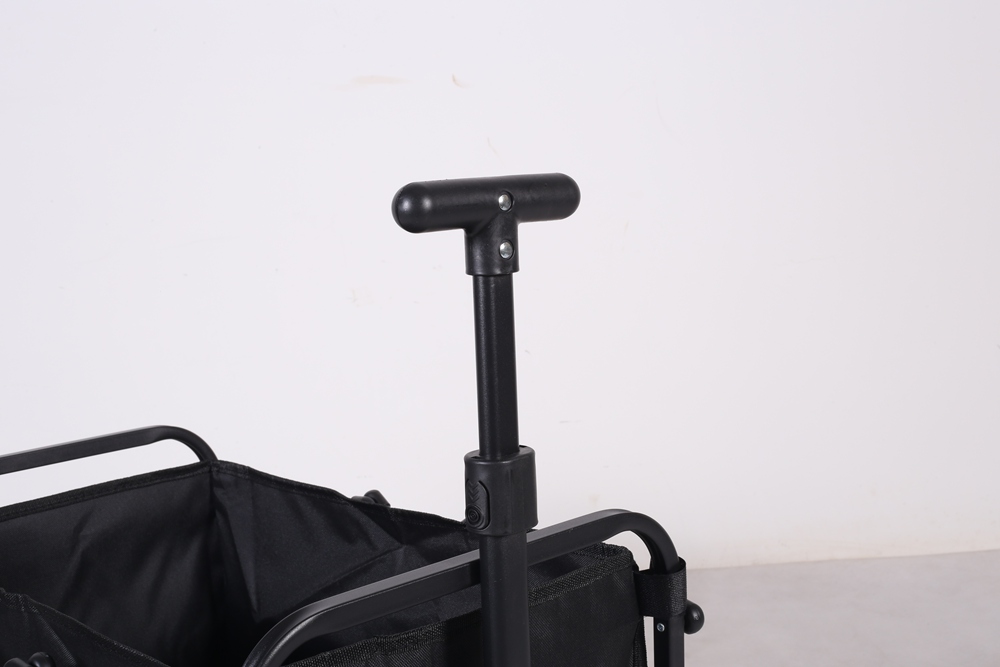
Official handgrip and stem reference for this cart. The photograph does not define the measuring position or establish adjustability, settings or the function of the visible collar.
Connect the published dimensions to a marked view
The Outdoor Utility Cart listing gives a dimensions entry of 58 × 35 × 84 cm. Before using that entry to compare offers, ask the supplier to identify what each value measures and which cart configuration it describes. Keep its answer beside the selected product reference.
The handle close-up provides a useful place to mark questions, but it does not explain the measurement convention. Ask whether the published vertical dimension reaches the highest point of the cart, a particular point on the handle or another supplier-defined reference. Retain that definition rather than assigning one automatically.
Separate overall height from grip height
Overall product height and the height of the handgrip answer different buying questions. A quotation should make each requested value identifiable, even if the supplier later confirms that two references coincide in a particular configuration. Use an annotated drawing or photograph to keep the points unambiguous.
Requested reference
Points to identify
Configuration to state
Overall height
Support surface and highest product point
The supplier’s specified cart and handle position
Grip height
Support surface and named grip point
The same identified configuration
Handle-related projection
Named cart boundary and handle extremity
Position used for the stated footprint
Catalogue dimension
Supplier mapping of the published value
Reference view and version
Overall reference from the same product page. Ask the supplier which assembled configuration the stated dimensions describe; no role or inclusion of the separate fabric piece is inferred here.
Ask how the offered handle is configured
Request an explicit description of the supplied handle arrangement. Ask whether its position is fixed or whether the supplier offers a defined adjustment or movement. The visible stem and collar are useful identifiers for that question; their appearance does not establish a mechanism or a set of usable positions.
If the supplier confirms multiple positions, ask it to identify the one used in the quotation and dimension reference. Request separate values for any additional position needed for the buyer’s comparison. Keep a proposed option distinct from the configuration the supplier has actually confirmed for the order.
Name the support surface and grip point
Ask the supplier to show the cart on its stated support surface and mark the endpoints used for each requested height. A dimension taken to the top of the grip can differ from one taken to its centre or another contact reference. Name the point that matters to the enquiry instead of using the word handle without qualification.
Keep the cart configuration consistent between the drawing and the supplier’s answer. If the sample or image shows a different position, ask for the difference to be identified. This is a measurement-reference task; it does not establish a particular user’s reach or an ergonomic suitability result.
Official connection-area view for identifying a drawing reference. It is not evidence of a confirmed release or locking function, nor a measured handle setting.
Keep handle position with the footprint comparison
The handle can be relevant when a buyer compares the space a proposed configuration occupies. Ask the supplier whether the stated outer dimensions include the handle in that position. Retain an explicit boundary view where the cart will be compared with a buyer-defined storage or handling space.
Do not treat an overall dimension as usable interior space. If the enquiry also needs an internal carrying-area dimension, request it as a separate reference. Keeping the external outline, handle position and interior requirement on distinct lines helps prevent an apparent size match from answering the wrong question.
Request an identified sample measurement
For sample review, ask the supplier to identify the model and configuration before showing the measurement points. A marked view should connect the stated value to the same grip, stem and cart arrangement used in the proposal. Keep the image or drawing reference with the reported result.
If a result differs from the catalogue entry, ask whether the explanation concerns the measuring points, configuration, product version or another stated reason. Record the answer against the affected dimension. Do not silently replace a published figure with a new value while leaving its basis unresolved.
Release one current dimensional description
Close the enquiry with a current product reference, an identified handle arrangement and the supplier’s annotated dimensions. If the handle or frame proposal changes, confirm which dimensions need updating before carrying an earlier approval into the revised order.
Map each catalogue value to named endpoints.
Keep overall height and grip height identifiable.
State the handle position used in the comparison.
Match the supplier’s sample view to the current proposal.
Send the annotated questions through the supplier contact page. The outdoor-product articles provide related sourcing context; the confirmed drawing defines the requested dimension basis.
Frequently asked questions
Does the last catalogue number automatically mean grip height?
Ask the supplier to map every value to the points and configuration it uses. The listing does not provide that annotated definition.
Does a visible collar establish an adjustable handle?
Request the supplier’s explanation of the actual offered arrangement and any confirmed positions. A static detail photograph alone does not establish them.
What should accompany a revised height?
Keep the product version, handle position and marked measuring points with the revised value so later teams compare the same configuration.
Utility cart handlesDimension referencesB2B outdoor sourcing